
































PORTAL EVANGÉLICO - NOTÍCIAS
EVANGELIC DOORWAY - NEWS
+DOM MOYSÉS FALA SOBRE AS CASULAS (VESTIMENTAS RELIGIOSAS)
+DON MOYSES TALKS ABOUT THE CHASUBLES (RELIGIOUS CLOTHING)


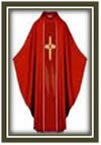
Respondendo pergunta que lhe foi feita, sobre casula, +Dom Moysés Barbosa respondeu e complementou com algumas ilustrações.
Answering that question has been made on chasuble, +Don Moyses Barbosa said and complemented with some illustrations.
Casula é um paramento religioso, mais exatamente uma peça do vestuário dos ministros religiosos, normalmente só usada no interior dos templos, durante as celebrações, ou mesmo em ambientes externos em solenidades especiais: é uma roupa que é colocada por cima da vestimenta normal: varia em forma, cores, etc e pode ser ornada ou não com símbolos sacro-religiosos, sendo que recebe outros nomes e algumas variações quando destinada ao oficiais da igreja que não sejam Pastores, Bispos e Arcebispos ou outros clérigos superiores.
Chasuble is a religious vestment, more exactly a piece of clothing for ministers, usually only used inside the temples, during celebrations, or even outdoors on special solemnities, is a garment is placed over the normal clothing: they vary in shape, color, etc. and can be decorated with symbols or non-religious sacrum, and receives other names and variations when intended for church officials who are not pastors, bishops and archbishops or other superior clerics.
Ela pode ser de corpo inteiro ou cobrindo apenas a parte do tórax: esta última é chamada de meia casula, murça religiosa ou casula de ombro e tanto as compridas como as curtas se assemelham aos uniformes dos corais e vestimentas parecidas são usadas em solenidades de colação de grau.
It may be covering the whole body or just part of the chest: the latter is called a half chasuble, chasuble murça religious or shoulder and both the short and long resemble the uniforms of corals and similar garments are used in ceremonies collation of degree.
As imagens acima (ilustrativas) são de casulas (as duas da esquerda são de ombro, uma das quais a usada por +Dom Moyses Barbosa).
The above images (illustrations) are chasubles (the two are left shoulder, one of which was used by +Don Moyses Barbosa).


Pastor Dr. Guilhermino Cunha, da Catedral Presbiteriana, e o Bispo Dom Ricardo Lopes Firmino, Segundo Vice-Presidente da Corte Brasileira de Justiça Arbitral e Eclesiástica, com casulas de ombro.
Pastor Dr. Guilhermino Cunha, of the Presbyterian Cathedral, and Bishop Don Ricardo Lopes Firmino, Second Vice-President of the Brazilian Court of Arbitral Justice and Ecclesiastical, with chasubles shoulder.


A casula de corpo inteiro (esquerda) é a chamada Gótica e a de meio corpo (direita) é conhecida como Romana, é o que nos informa a Wikipedia,
The chasuble whole body (left) is called the Gothic and half-body (right) is known as Roman, is what tells us Wikipedia.
AS CORES LITÚRGICO-RELIGIOSAS
LITURGICAL COLORS-RELIGIOUS
Não apenas nas vestimentas, mas também em outras circunstâncias, as cores são muito usadas e cada uma com um significado, um simbolismo: cada religião normalmente tem suas cores e simbologias.
Not just in dress but also in other circumstances, the colors are widely used and each wit ha meaning, symbolism, every religion has its normal color and symbols.
Inexistindo prévia regulamentação de natureza religiosa, normalmente as cores podem ser utilizadas, em diversas circunstâncias, conforme seu significado/simbolismo mais aceito.
Where no prior regulations of a religious nature, the colors can usually be used in various circumstances, as their meaning / symbolism more accepted.
Usam-se as cores em diferentes atos, seja nas bandeiras, vestes, adornos, toalhas, cortinas, faixas de enfeite, panos de fundo etc... especialmente em celebrações solenes, levando-se em conta o que elas significam e as mais antigas e, também, mais usadas são as seguintes: Branco (vitória, paz, alma pura, alegria), Vermelho (sangue, fogo, amor divino, martírio), Verde (esperança), Preto (luto) e Rosa (alegria) - outras cores, como Amarelo e Azul, com significados semelhantes a estes ou outros têm sido introduzidas e bem aceitas pelas comunidades.
They use the colors in different acts, or flags, clothes, ornaments, towels, curtains, tracks ornament, backgrounds etc... especially solemn celebrations, taking into account what they mean and he oldest and also most used are as follows: White (victory, peace, pure soul, joy), Red (blood, fire, divine love, martyrdom), Green (Hope), black (mourning) and Rosa (joy) - other colors with similar meanings to these or others have been introduced and well accepted by communities.
