





























A CIÊNCIA E A BÍBLIA
THE SCIENCE AND THE BIBLE
ALTAR DE PEDRAS NO MONTE EBAL
ALTAR STONES ON MOUNT EBAL
“Então Josué edificou um altar ao Senhor, Deus de Israel, no monte Ebal...” (Josué 8:30-35)
“Then Joshua built an altar to the Lord God of Israel in Mount Ebal...” (Joshua 8:30-35)
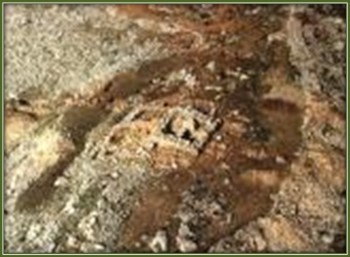
ALTAR DE JOSUÉ VISTO POR CIMA
ALTAR OF JOSHUA SEEN OVER
Na Biblia, Monte Ebal junto a Siquém: o que foi encontrado ali seria o altar de Josué?
In the Bible, Mount Ebal near Shechem, which was found there would be the altar of Joshua?
Tudo indica que sim e alguns especialistas o datam de 1.250 a.C, mas segundo dados de arqueologia que constam nos arquivos deste ministério, a data da construção deste lugar de adoração (após a travessia do Rio Jordão), data de 1.400 a.C., o que mais se harmoniza com a cronologia bíblica que aponta a saída do Egito em 1.440 a.C. (quarenta anos de peregrinação pelo deserto).
It would appear so, and some experts dating from the 1250 a.C, but according to archaeological data contained in the archives of this ministry, the date of construction of this place of worship (after crossing the Jordan River), the date of 1400 BC, the most in tune with the biblical chronology suggests that the output from Egypt in 1440 BC (forty years of wandering in the desert).
Fontes israelitas sempre consideraram Siquém um lugar central sagrado para as tribos que chegaram para a posse da terra; além disso, a santidade de Siquém também encontra expressão nas histórias dos Patriarcas: quando Abraão e sua família emigraram da Mesopotâmia para a terra de Canaã, Siquém apareceu primeiro - “e passou Abrão por aquela terra até ao lugar de Siquém, até o carvalho de Moré; e estavam então os cananeus na terra, e o Senhor apareceu a Abrão, e disse: à tua descendência darei esta terra e edificou ali um altar ao Senhor, que lhe apareceu” (Gênesis 12:6-7).
Israeli sources have always considered Shechem a central place sacred to the tribes who came into the possession of land, in addition, the sanctity of Shechem also finds expression in the stories of the Patriarchs, where Abraham and his family emigrated from Mesopotamia to the land of Canaan, Shechem came first - “and Abram passed through the land unto the place of Shechem, to the oak of Moreh, and the Canaanite was then in the land, and the Lord appeared to Abram and said to your descendants I give this land and built an altar the Lord appeared to him” (Genesis 12:6-7).
Esta tradição foi continuada por Jacó: “E chegou Jacó em paz à cidade de Siquém, que está na terra de Canaã, quando veio de Padã-Arã, e acamparam em frente da cidade; e ele comprou a parte do terreno, onde ele tinha a sua tenda, ao lado dos filhos de Hamor, pai de Siquém, por cem peças de prata, e ergueu ali um altar, e invocou a Deus, o Deus de Israel” (Gênesis 33:18-20).
This tradition was continued by Jacob: “And Jacob came in peace to the city of Shechem, which is the land of Canaan, when he came out of Padanaram, and encamped before the city, and he bought a parcel of land where he had his tent, beside the sons of Hamor the father of Shechem for an hundred pieces of silver, and built an altar there, and invoked God, the God of Israel” (Genesis 33:18-20).
Parece haver uma conexão direta entre este importante relato e o que consta em Deuteronômio 27 e Josué 8, relativa a um altar erguido no Monte Ebal, face a uma importante aliança feita alí: Moisés e os anciãos de Israel ordenaram ao povo, dizendo - Cumpram todos os mandamentos que eu hoje vos ordeno, e será no dia em que haveis de passar o Jordão para a terra que o Senhor teu Deus te dá, que te porás a grandes pedras, gesso e estuque com eles... e será que, quando passares o Jordão, vocês peguem essas pedras, que eu te ordeno, para o monte Ebal, e as cobrirás com gesso; e não serás um altar ao Senhor teu Deus, um altar de pedras... construirás o altar do Senhor teu Deus com pedras brutas para oferecer sacrifícios de holocaustos ao Senhor teu Deus... e tu deverás escrever sobre as pedras todas as palavras desta lei, muito claramente; e Moisés, os sacerdotes, e os levitas falaram a todo o Israel, dizendo: “Calai-vos, e ouvi, ó Israel, porque hoje tu és formado um povo ao Senhor teu Deus...” (Deuteronômio 27: 1-9).
There seems to be a direct connection between this important report and contained in Deuteronomy and Joshua August 27 on an altar erected on Mount Ebal, from a major alliance made over there, Moses and the elders of Israel commanded the people, saying - Fulfill all the commandments which I command you today, and will be the day that ye shall pass over Jordan into the land which the LORD thy God giveth thee, that thou shalt stand the great stones, plaster and stucco with them... and that will be When you pass over Jordan, you take those stones, which I command thee, Mount Ebal, and overlay them with plaster, and you will not be an altar unto the Lord thy God, an altar of stones... to build the altar of the Lord thy God with rough stones to offer sacrifices of burnt offerings unto the Lord thy God ... and thou shalt write upon the stones all the words of this law, very clearly, and Moses, the priests and the Levites spake unto all Israel, saying: “Be silent and hear, O Israel, because today you are a people formed the Lord your God...” (Deuteronomy 27: 1-9).
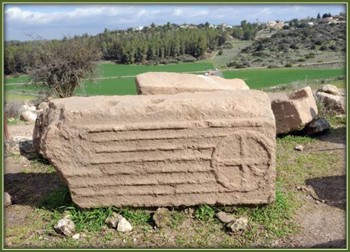
UMA PEDRA DE UMA ESCAVAÇÃO ARQUEOLÓGICA EM HORBAT MIDRAS, ISRAEL, ONDE OS ESTUDIOSOS ACREDITAM QUE O PROFETA ZACARIAS VIVEU E FOI SEPULTADO
A STONE AT AN ARCHEOLOGICAL EXCAVATION SITE IN HORBAT MIDRAS, ISRAEL, WHERE SCHOLARS BELIEVE THE PROPHET ZECHARIAH LIVED AND WAS BURIED
Foi considerada de grande importância excepcional pela Autoridade de Antiguidades de Israel (AAI) a descoberta de obras públicas e mosaico que realmente impressionam, nas escavações de recuperação realizadas pela instituição em ruínas de Horbat Midras, na segunda metade do ano de 2010.
Was considered of exceptional importance for the Israel Antiquities Authority (IAA) the discovery of mosaic works and what really impressed, in excavations conducted by the institution of recovery in the ruins of Horbat Midr in the second half of 2010.
O mosaico está sendo considerado um excepcional achado da arqueologia e chama a atenção não apenas pelo tamanho, mas também pela rara beleza: a construção de uma igreja e de edifício público foi revelada nas escavações da IAA nas várzeas Horbat Midras na Judéia, sendo que vários pesquisadores j estiveram no local no decorrer da escavação e foram unânimes em dizer que naquele lugar foi enterrado o profeta Zacarias, hipótese que ainda está sendo verificada.
The mosaic is being considered an exceptional finding of Archaeology and draws attention not only by size but also by the rare beauty: the construction of a church and public building was unveiled at the IAA Excavations in Horvat Midr floodplains in Judea, where several j investigators were on site during excavation and were unanimous in saying that there was buried the prophet Zechariah, hypothesis that is still being verified.
