


































A CIÊNCIA E A BÍBLIA
THE SCIENCE AND THE BIBLE
CARTA DO REI ABGARO A JESUS
LETTER FROM JESUS KING ABGAR
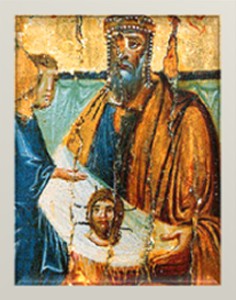
Abgaro Ukkama V (imagem acima) foi rei da cidade de Edessa (Síria) entre 4 a.C. e 7 dC, quando foi destronado por seu irmão Mahanu IV: A tradição oral na antiga Síria diz que, por volta do ano 32 d.C., sofrendo de terrível lepra, Abgaro escreveu uma carta endereçada a Jesus, pedindo para que ele fosse até Edessa para curá-lo.
Ukkama Abgar V (pictured above) was the king of Edessa (Syria) between 4 BC and 7 AD, when it was overthrown by his brother Mahanu IV: The oral tradition in ancient Syria says that around the year 32 AD, suffering from terrible leprosy, Abgar wrote a letter to Jesus, asking him to go to Edessa to heal him.
Abgaro V ou Abgarus V de Edessa (reinou entre 4 AC - 7 DC e 13 - 50 d.C.) foi rei do reino de Osroena, situando a sua capital em Edessa, na Mesopotâmia (atual Síria), também designada por Aram-Naharaim no Velho Testamento e de acordo com escritos muitíssimos antigos (para críticos pura lenda), Abgaro foi convertido ao Cristianismo por Addai, um dos Setenta e Dois Discípulos de Jesus (Lucas 10:1-20).
Abgar V of Edessa or Abgarus V (reigned from 4 BC - AD 7 and 13 - 50 AD) was the king of the kingdom of Osroena by putting their capital at Edessa, in Mesopotamia (modern Syria), also known as Aram-Naharaim the Old Testament and according to many, many ancient writings (for critical pure legend), Abgar was converted to Christianity by Addai, one of the Seventy-Two Disciples of Jesus (Luke 10:1-20).
A carta do soberano foi entregue a Jesus por seu emissário Hannam: ela é longa e reconhece o poder do Senhor.
The letter from the sovereign was given to Jesus by his emissary Hannam: it is long and recognizes the power of the Lord.
Mas como seria lenda se Abgaro já havia se convertido ao Cristianismo? Natural ele sendo cristão buscar a cura em Jesus, por carta, estando longe, pois a Biblia relata que outras pessoas buscaram a Jesus, pessoalmente, no momento da enfermidade, mas por estarem perto dele.
But how would Abgar legend has already had converted to Christianity? It is natural to Christians seeking healing from Jesus, by letter, being far away, as the Bible reports that other people sought Jesus, personally, at the time of illness, but by being near him.
TRECHO INICIAL DA MISSIVA DE ABGARO
PORTION OF ORIGINAL LETTER OF ABGAR
“Feliz és tu que acreditaste em Mim não tendo Me visto, porque está escrito sobre Mim que aqueles que me verão não acreditarão em Mim, e aqueles que não me verão acreditarão em Mim...”.
“Blessed are you who believed in me not having seen me, because it is written of me that those who see me not believe in Me, and those who see me will believe in me...”.
TRECHO INICIAL DA MISSIVA-RESPOSTA DE JESUS
EXCERPT FROM THE INITIAL RESPONSE-MISSIVE OF JESUS
“Eu te enviarei um dos meus discípulos, que curará todos os teus sofrimentos, e eu te darei saúde outra vez, e converterei todos os que estão contigo para a vida eterna. E tua cidade será abençoada para sempre, e os teus inimigos nunca a dominarão...”
“I’ll send one of my disciples who will heal all thy sufferings, and I'll give you health again, and convert all who are with thee unto life eternal. And your city will be blessed forever and ever to dominate your enemies...”.
O historiador eclesiástico do Século IV, Eusébio, Bispo de Cesareia, registrou a tradição na sua Historia Ecclesiastica (325 dC), referindo-se a correspondência trocada entre Abgaro de Edessa e Jesus: Eusébio estava convicto que as cartas originais, escritas em siríaco, estavam arquivadas em Edessa, e inclui na sua obra a íntegra do suposto texto das duas cartas, as quais foram traduzidas em grego, latim, copta, armênio, árabe e eslavo.
The ecclesiastical historian of the fourth century Eusebius, Bishop of Caesarea, recorded the tradition in his Historia Ecclesiastica (325 AD), referring to the correspondence between Abgar of Edessa and Jesus, Eusebius was convinced that the original letters, written in Syriac, were filed in Edessa, in his work and includes the full text of the supposed two letters, which were translated into Greek, Latin, Coptic, Armenian, Arabic and Slavic.
