


































A CIÊNCIA E A BÍBLIA
THE SCIENCE AND THE BIBLE
EBLA: ESCAVAÇÕES EM CIDADE NÃO-BÍBLICA CONFIRMAM AS ESCRITURAS
EBLA: DIGGING INTO CITY-NOT CONFIRM THE BIBLE SCRIPTURES
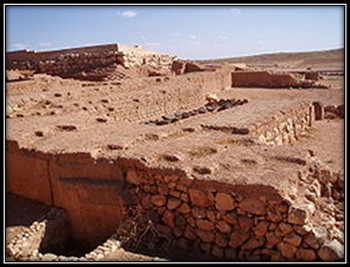
RUÍNAS DE EBLA
RUINS EBLA
Ebla foi uma antiga cidade localizada no norte da Síria, a cerca de 55 quilômetros, a sudoeste de Aleppo: foi uma importante cidade-estado em dois períodos, nos começos do 3º milênio a.C., e novamente entre 1800 e 1650 a.C.
Ebla was an ancient city in northern Syria, about 55 km southwest of Aleppo, was an important city-state in two periods, in the early 3rd millennium BC, and again between 1800 and 1.650 BC.
Ao longo dos anos, muito criticismo tem sido levantado quanto à confiabilidade histórica da Bíblia e estes criticismos são usualmente baseados na falta de evidência de fontes externas confirmando o registro bíblico: embora não seja possível verificar cada incidente descrito na Bíblia, as descobertas arqueológicas feitas desde a metade do século XVIII têm demonstrado a confiabilidade e plausibilidade da narrativa bíblica.
Over the years, much criticism has been raised about the historical reliability of the Bible and these criticisms are usually based on lack of evidence from outside sources to confirm the biblical record, although it is not possible to verify every incident in the Bible, the archaeological discoveries made since half of the eighteenth century have demonstrated the reliability and plausibility of the biblical narrative.
O lugar é atualmente conhecido como Tell Mardikh, e é famoso principalmente pelas 15.000 tabuinhas, aproximadamente, encontradas nos restos palácio real, contendo escritas cuneiforme, datadas por volta de 2.250 a.C., em línguas suméria e eblaíta, esta um dileto proto-hebraico até então desconhecido dentre as línguas semíticas.
The place is now known as Tell Mardikh, and is famous mainly for 15,000 tablets, approximately residues found in the royal palace, containing cuneiform writing, dating from around 2250 BC in the Sumerian language and Eblaite this a beloved proto-Hebrew until then unknown among Semitic languages.
Em 1964, arqueólogos italianos da Universidade de Roma La Sapienza sob a direção de Paolo Matthiae começaram a escavação em Tell Mardikh e em 1968 eles descobriram uma estátua dedicada à deusa Ishtar trazendo o nome Ibbit-Lim, um rei de Ebla, sendo que tal fato permitiu identificar a cidade, há muito conhecida em inscrições do Egito e Akkad.
In 1964, Italian archaeologists from the University of Rome La Sapienza under the direction of Paolo Matthiae began excavating at Tell Mardikh and in 1968 they recovered a statue dedicated to the goddess Ishtar bearing the name Ibbit-Lim, a king of Ebla and this fact identified the city, long known from inscriptions of Egypt and Akkad.
Confirmado na década de 70 que o palácio real é de aproximadamente 2.500 a 2.000 a.C., o que se harmoniza com a Biblia, pois apesar de não ter nos escritos sacros a palavra EBLA, nomes que aparecem em textos antigos remontam ao período patriarcal: portanto, o que foi descoberto pelos arqueólogos neste novo lugar, é de alguns milênios antes de Cristo.
Confirmed in the 70's that the palace is around 2500-2000 BC, which harmonizes with the Bible, because despite not having written in the sacred word EBLA, names that appear in ancient texts dating back to the patriarchal period: therefore, which was discovered by archaeologists in this new place is a few millennia before Christ.
Um semanário francês (Le Point), que publicou matéria sobre este achado, na edição 19 (março de 1979), declarou: “Os nomes próprios são espantosamente similares [aos das Escrituras]: na Bíblia encontramos “Abraão”, nas tabuinhas de Ebla, “Ab-ra-rum”; Esaú; - E-sa-um; Miguel - Mi-ki-ilu; Davi - Da-u-dum; Ismael - Ish-ma-ilum; Israel - Ish-ra-ilu. Os arquivos de Ebla também contêm os nomes de Sodoma e Gomorra, cidades mencionadas na Bíblia, mas cuja historicidade por muito tempo foi questionada pelos eruditos... ainda mais, as tabuinhas listam cidades na ordem exatamente igual como são mencionadas no Antigo Testamento: Sodoma, Gomorra, Adma, Zeboim e Bela (Gênesis 14:2)”.
A weekly French (Le Point), which published an article on this finding, in edição 19 (March 1979), stated: “The names are amazingly similar to [the Scriptures], found in the Bible “Abraham”, the tablets of Ebla “Ab-ra-rum”; Esau - E-sa-a, Miguel - Mi-ki-ilu; David - Da-dum-u; Ishmael - Ish-ma-ilum, Israel - Ish-ra-ilu. The archives of Ebla also contain the names of Sodom and Gomorrah, cities mentioned in the Bible, but whose historicity has long been questioned by scholars... moreover, the tablets list cities in order are exactly the same as mentioned in the Old Testament: Sodom, Gomorrah, Adma, Zeboim and Belle (Genesis 14:2)”.
A descoberta do arquivo de Ebla tem mostrado que os escritos bíblicos concernentes aos Patriarcas são de todo viáveis, pois documentos escritos em tabletes de argila de cerca de 2.300 a.C. mostram que os nomes pessoais e de lugares mencionados nos registros históricos sobre os Patriarcas são genuínos.
The discovery of the Ebla archive has shown the Biblical writings concerning the Patriarchs to be viable, as written in clay tablets from around 2300 BC demonstrate that personal names and places mentioned in the records of the Patriarchal accounts are genuine.
O nome “Canaã” estava em uso em Ebla - um nome que críticos já afirmaram não ser utilizado naquela época - e, portanto, incorretamente empregado nos primeiros capítulos da Bíblia; a palavra “tehom” (“o abismo”) usada em Gênesis 1:2 era considerada como uma palavra recente, demonstrando que a história da criação foram escrita bem mais tarde do que o afirmado tradicionalmente, mas “Tehom”, entretanto, era parte do vocabulário usado em Ebla, cerca de 800 anos antes de Moisés e costumes antigos, refletidos nas histórias dos Patriarcas, também foram descritos em tabletes de argila encontrados em Nuzi e Mari.
The name “Canaan” was in use in Ebla - a name critics once said was not used at that time - and, therefore, used incorrectly in thefirst chapters the Bible, the word “tehom” (“the abyss”) in Genesis1 : 2 was considered as a late word demonstrating that the creation story was written much later than the traditionally claimed, but “Tehom”, was part of the vocabulary at Ebla, around 800 years before Moses and customs former reflected in the stories of the Patriarchs have also been described on clay tablets found at Nuzi and Mari.
