




































A CIÊNCIA E A BÍBLIA
THE SCIENCE AND THE BIBLE
ARADE: RUÍNAS SUBSISTEM ATÉ OS DIAS ATUAIS
ARADE: RUINS REMAINING UNTIL THE PRESENT DAYS
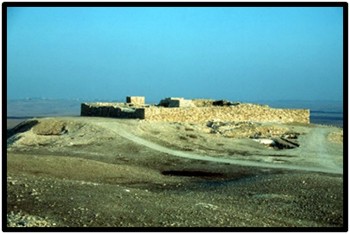
A Bíblia faz referências à antiga cidade de Arade, e uma delas transcrevemos a seguir: “Ora, ouvindo o cananeu, rei de Arade, que habitava no Negebe, que Israel vinha pelo caminho de Atarim, pelejou contra Israel, e levou dele alguns prisioneiros” (Números 21:1).
The Bible makes references to the ancient city of Arad, one of which is reproduced here: “Now, listening to the Canaanite king of Arad, who dwelt in the south that Israel came by way of Atarim, fought against Israel, and took some prisoners” (Numbers 21:1).
A tribo de Judá era a mais numerosa de todas as tribos de Israel e lhe coube uma região ao sul, entre o deserto de Negueve e o Sefelá, o maior dos territórios partilhados: cidades importantes, como Belém, Hebrom, ARADE, Bete-Semes, Laquis e Berseba foram incluídas nos seus domínios.
The tribe of Judah was the most numerous of all the tribes of Israel and he fits an area to the south, between the lowland and the Negev Desert, the largest of shared territories, major cities like Bethlehem, Hebron, ARADE, Beth Shemesh, Lachish and Beersheba were included in their field.
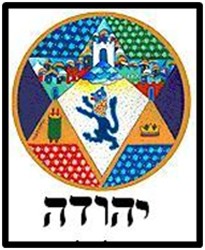
SÍMBOLO DA TRIBO DE JUDÁ
SYMBOL OF THE TRIBE OF JUDAH
Escavações realizadas por Y. Aharoni e R. B. K. Amiran no período de 1962 a 1974 comprovaram a existência de Arade, situada a 30km ao nordeste de Berseba, a este do Mar Morto, cujas ruínas bem conservadas subsistem até os dias atuais, como se pode concluir na foto superior.
Excavations carried out by Y. Aharoni and R. B. K. Amiran the period 1962 to 1974 proved the existence of Arad, located 30km northeast of Beersheba in this Dead Sea, ruins of which remain well preserved, as can be concluded in the top photo.
CREDITO / CREDIT: The New Bible Dictionary, Wheaton, Illinois: Tyndale House Publishers, Inc., 1962.
